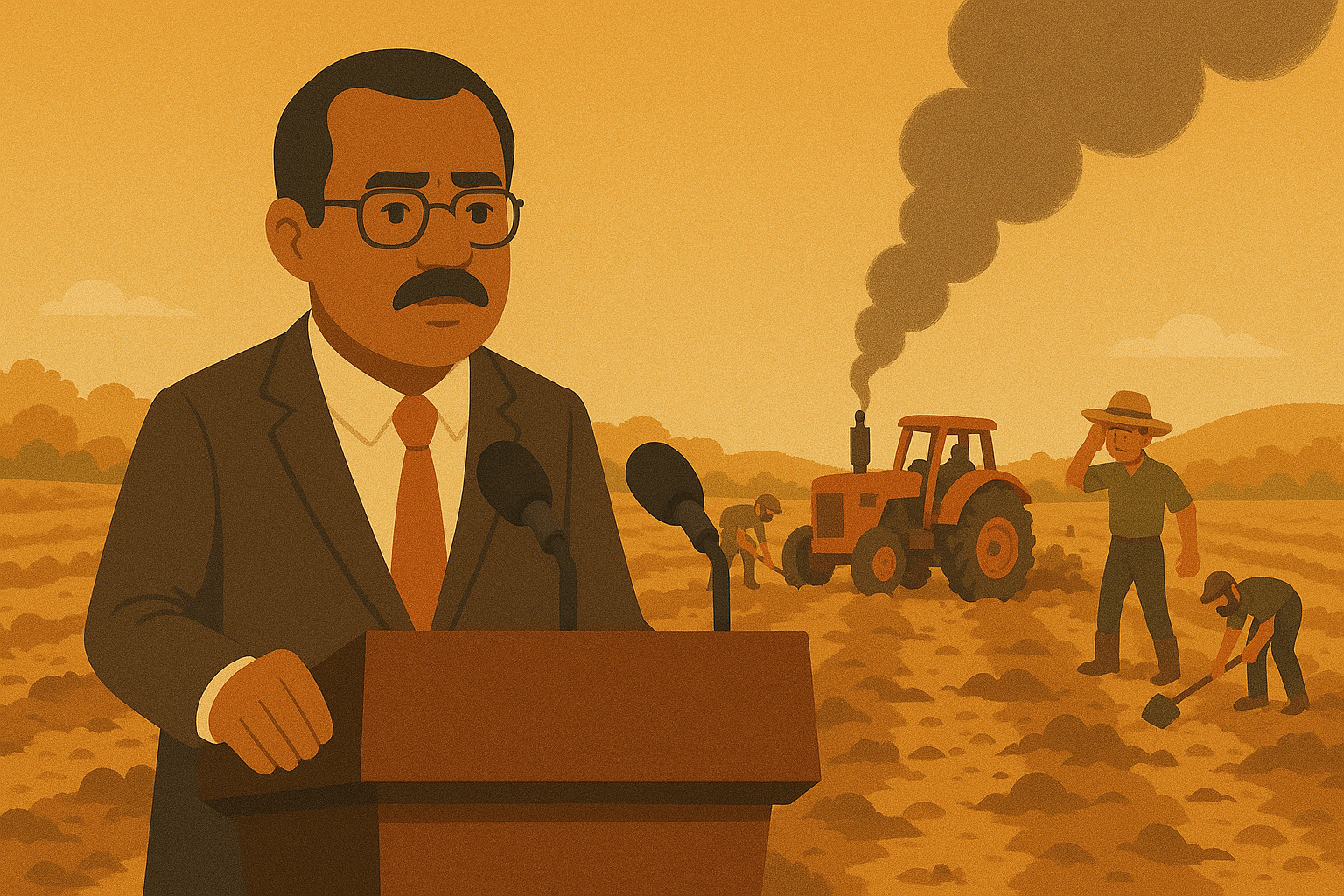
Prime Minister Gaston Browne is urging Antiguans and Barbudans to buy more locally produced food as part of a renewed national push to strengthen food security and reduce household grocery costs. The appeal came during Thursday’s presentation of the 2026 national budget, where Browne highlighted local agriculture as a key tool in easing cost-of-living pressures.
Browne told Parliament that supporting local farmers and fishers is one of the most effective ways for consumers to shield themselves from unpredictable global prices. He framed the call as both an economic and a health message, noting that locally grown produce is typically fresher, more affordable, and less vulnerable to external supply chain disruptions.
“Support our local farmers and fishermen… it’s smart, healthy, live long,” he said, arguing that domestic production must play a larger role in stabilising supermarket prices.
At face value, the message is reasonable. Most citizens would agree that stronger local agriculture benefits the entire nation.
But the reality on the ground tells a more complicated story.
⸻
A Policy Message With a Personal Shadow
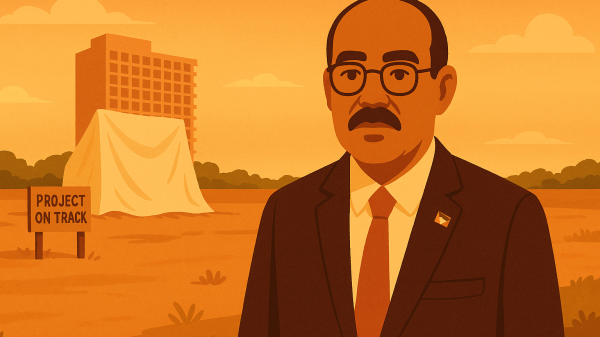
What the Prime Minister did not address is the uncomfortable conflict-of-interest that looms over this “buy local” campaign: the fact that his own farming enterprise is the most technologically advanced, well-financed, and well-resourced agricultural operation in the country.
While the PM’s farm benefits from cutting-edge technology, reliable water access, financial capacity, and an economy of scale unmatched by the average grower, many small and mid-sized farmers struggle daily just to stay afloat—facing:
• chronic water shortages
• high input costs
• lack of irrigation infrastructure
• limited access to financing
• drought conditions made worse by stalled or insufficient government action
Against that backdrop, the national call to “buy local” risks sounding less like a broad agricultural strategy and more like an indirect advertisement for Farmer Browne’s Fresh Produce & Meats.
When the country’s most powerful policymaker is also one of its largest private agricultural stakeholders, even well-intentioned public messaging becomes politically loaded.
⸻
A Question of Integrity—At Least on Paper
While Antigua and Barbuda does not meaningfully practice the ethical safeguards envisioned in our laws, the Prime Minister’s dual posture as policymaker and dominant agricultural producer appears, on its face, to run afoul of the Integrity in Public Life Act—a document that increasingly feels more aspirational than legally binding. The Act was designed to prevent conflicts of interest and ensure that public officials do not use their positions, directly or indirectly, to advance personal commercial gain. Yet when the head of government promotes a national “buy local” campaign while operating the country’s most advanced private farm—one that stands to benefit from increased market demand—the gap between the law and its application becomes glaring. It forces the nation to confront an unsettling question: What good is an Integrity Act if its protections exist only in theory and never in practice?
⸻
A Sector in Crisis—Still Waiting for Solutions
The government’s claim that it will “continue supporting farmers through grants, land access, and irrigation improvements” rings hollow for many in the sector who have been calling for years for meaningful, sustained intervention. The longstanding water crisis—acute in rural farming districts—remains unresolved despite repeated assurances and budgetary allocations.
Farmers report:
• crops dying for lack of irrigation
• livestock producers unable to maintain herds
• wells dry or nonfunctional
• inconsistencies in promised government support
• the absence of a robust national water-management plan
Without reliable water, no amount of encouragement to “buy local” can meaningfully transform the sector.
⸻
Cheaper Imports + Local Agriculture = A Policy Contradiction
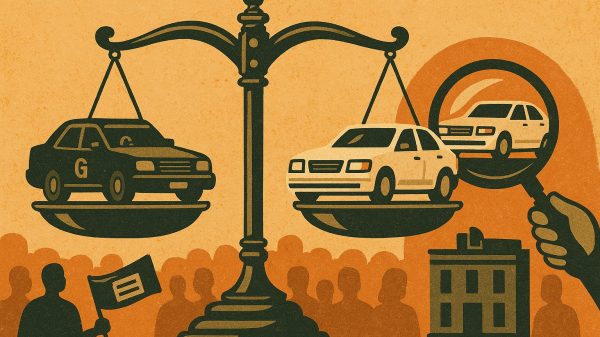
The PM’s strategy also includes suspending the 42% Common External Tariff on selected imported foods. That may temporarily reduce prices—but it also places direct downward pressure on local farmers, who now face competition from cheaper imported goods while already struggling with daily operational burdens.
The government is simultaneously:
• subsidising imports
• urging people to buy local
• expecting local farmers to increase output
• and failing to resolve the water crisis that makes increased output nearly impossible
These conflicting policies raise legitimate questions about whose interests the agricultural agenda truly serves.
⸻
Food Security Requires Equity—Not Optics
Strengthening food security is a national priority, but genuine progress requires:
• equitable access to resources
• a functional water infrastructure
• transparent policy development free from personal conflicts
• and long-term investments that benefit all farmers, not just the well-positioned few
Until those systemic issues are addressed, calls to “buy local” will continue to echo as political talking points rather than transformative public policy.
At minimum, the government owes citizens an agricultural strategy that is consistent, credible, and free of self-promotion—one that empowers the farmers who have struggled for decades, not just the ones with access to capital, technology, and political advantage.